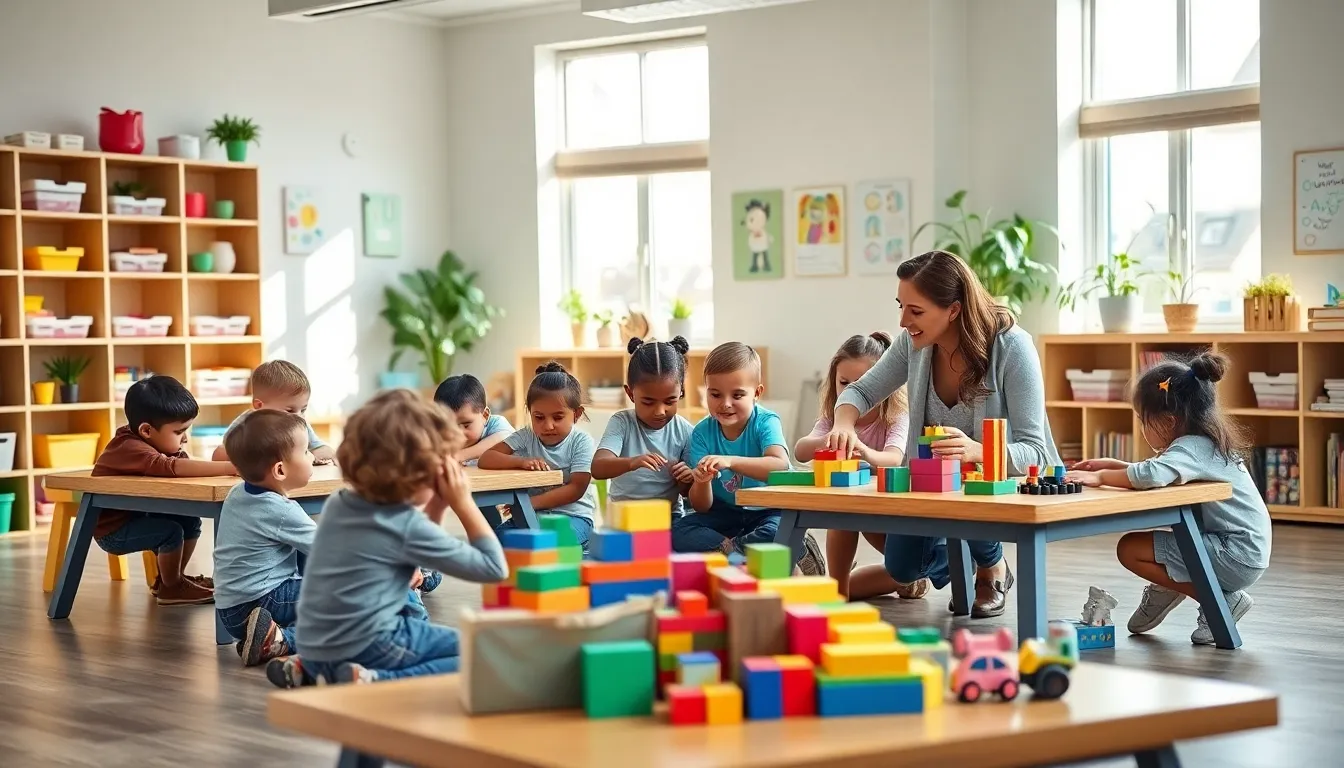
Early childhood education examples range from play-based activities to structured curricula. Each approach offers unique benefits for children ages birth through eight. Parents and educators often wonder which methods work best for different learning styles. The answer depends on the child, the environment, and specific developmental goals. This guide covers proven early childhood education examples that help young learners build essential skills. From Montessori classrooms to Reggio Emilia projects, these methods shape how children think, create, and interact with the world around them.
Table of Contents
ToggleKey Takeaways
- Early childhood education examples include play-based learning, Montessori, Reggio Emilia, and structured curricula—each offering unique benefits for children from birth to age eight.
- Play-based methods like dramatic play centers, sensory tables, and block play engage children’s natural curiosity while building cognitive, language, and motor skills.
- Montessori classrooms use self-directed work periods and hands-on materials to foster independence, concentration, and internal motivation in young learners.
- Reggio Emilia-inspired programs emphasize long-term projects and creative expression, allowing children to explore concepts through art, music, and collaborative discovery.
- Structured curricula like HighScope and Creative Curriculum provide clear frameworks and measurable outcomes for tracking developmental progress.
- The most effective early childhood education examples balance structured learning with child-led exploration to support well-rounded development.
What Is Early Childhood Education?
Early childhood education refers to formal and informal learning experiences for children from birth to age eight. This period represents a critical window for brain development. Children form neural connections at a rapid pace during these years.
Early childhood education examples include preschool programs, daycare centers, kindergarten classes, and home-based learning activities. The goal remains consistent across settings: prepare children for academic success while supporting social-emotional growth.
Research from the National Institute for Early Education Research shows that quality early childhood education programs improve outcomes in reading, math, and social skills. Children who attend high-quality programs also show lower rates of grade repetition and special education placement.
Early childhood education covers several developmental domains:
- Cognitive development: Problem-solving, memory, and logical thinking
- Language development: Vocabulary, communication, and early literacy
- Physical development: Fine and gross motor skills
- Social-emotional development: Self-regulation, empathy, and relationship skills
Different early childhood education examples emphasize these domains in various ways. Some programs prioritize academic readiness. Others focus on play and exploration. The most effective approaches balance structure with child-led discovery.
Play-Based Learning Examples
Play-based learning uses games, imaginative scenarios, and hands-on activities as teaching tools. This approach recognizes that young children learn best through direct experience rather than passive instruction.
Here are specific early childhood education examples using play-based methods:
Dramatic Play Centers
Classrooms set up stations where children act out real-world scenarios. A pretend grocery store teaches counting and social interaction. A doctor’s office introduces vocabulary and helps children process healthcare experiences. Children develop language skills as they negotiate roles and create storylines together.
Sensory Tables
Teachers fill bins with sand, water, rice, or other materials. Children explore textures while building fine motor control. Adding measuring cups introduces math concepts. Hiding small objects in the material creates a search-and-find game that builds focus and persistence.
Block Play
Building with blocks teaches spatial reasoning, physics concepts, and problem-solving. Children learn about balance, symmetry, and cause-and-effect relationships. Collaborative building projects also develop teamwork and communication skills.
Outdoor Exploration
Nature walks, gardening, and playground activities count as early childhood education examples too. Children observe insects, collect leaves, and ask questions about their environment. These experiences build scientific thinking and environmental awareness.
Play-based early childhood education works because it engages children’s natural curiosity. Kids don’t realize they’re learning, they’re just having fun. This intrinsic motivation leads to deeper understanding and better retention of concepts.
Montessori Method in Practice
The Montessori method stands out among early childhood education examples for its child-centered philosophy. Dr. Maria Montessori developed this approach in Italy over a century ago. Today, thousands of schools worldwide use her techniques.
Montessori classrooms look different from traditional settings. Children of mixed ages work together. Materials sit on low, accessible shelves. Students choose their own activities within a prepared environment.
Practical Life Activities
Montessori programs include tasks like pouring water, buttoning clothes, and washing dishes. These activities build independence and fine motor control. Children gain confidence as they master real-world skills.
Sensorial Materials
Montessori classrooms feature specific learning materials. The pink tower teaches size discrimination. The color tablets develop visual perception. Sound cylinders train auditory skills. Each material isolates one concept for focused learning.
Self-Directed Work Periods
Children in Montessori programs spend extended periods, often two to three hours, working on self-selected activities. Teachers observe and guide rather than direct. This approach builds concentration, decision-making skills, and internal motivation.
These early childhood education examples from Montessori settings show respect for children’s natural development. The method trusts children to guide their own learning within carefully designed boundaries. Research published in the journal Science found that Montessori students showed stronger academic and social outcomes compared to peers in traditional programs.
Reggio Emilia-Inspired Activities
The Reggio Emilia approach originated in northern Italy after World War II. This philosophy views children as capable, curious, and full of potential. Early childhood education examples from Reggio-inspired programs emphasize project-based learning and creative expression.
Long-Term Projects
Reggio classrooms pursue in-depth investigations that can last weeks or months. If children show interest in birds, the class might observe local species, research migration patterns, create bird sculptures, and build feeders. Learning emerges from children’s questions rather than a preset curriculum.
Documentation
Teachers in Reggio-inspired programs photograph, record, and display children’s work extensively. This documentation shows children that their ideas matter. It also helps educators track learning and plan next steps.
The Hundred Languages
Reggio philosophy recognizes that children express understanding in many ways, drawing, sculpting, building, dancing, singing, and speaking. Classrooms provide rich materials for creative expression. A single concept might be explored through paint, clay, music, and dramatic play.
Environment as Teacher
Reggio educators design spaces with intention. Natural light, plants, mirrors, and beautiful materials create an inviting atmosphere. The environment itself becomes one of the early childhood education examples of intentional teaching.
Reggio Emilia-inspired programs work well for children who thrive on creativity and open-ended exploration. The approach requires skilled teachers who can follow children’s interests while ensuring key skills develop.
Structured Preschool Curriculum Examples
Some families and educators prefer early childhood education examples with clear structure and measurable outcomes. Structured curricula provide consistent frameworks that teachers follow.
HighScope
The HighScope curriculum balances child-initiated activities with teacher-planned experiences. Children follow a “plan-do-review” sequence. They choose activities, carry them out, and then reflect on what they did. This process builds metacognition, thinking about one’s own thinking.
Creative Curriculum
This widely-used program organizes learning around studies of topics like buildings, clothes, or transportation. Teachers set up interest areas and guide children through structured daily routines. Assessment tools help track progress across developmental domains.
Head Start Programs
Head Start provides early childhood education examples specifically for low-income families. These federally-funded programs follow the Head Start Early Learning Outcomes Framework. Services include health screenings, family support, and comprehensive early education.
Academic-Focused Preschools
Some preschools emphasize letter recognition, number skills, and kindergarten readiness. These programs use direct instruction, worksheets, and formal assessments. They appeal to parents concerned about school preparation.
Structured early childhood education examples offer predictability and clear benchmarks. Teachers know exactly what to teach and when. But, critics argue that too much structure limits creativity and intrinsic motivation. The best programs find balance, providing structure while honoring children’s developmental needs.