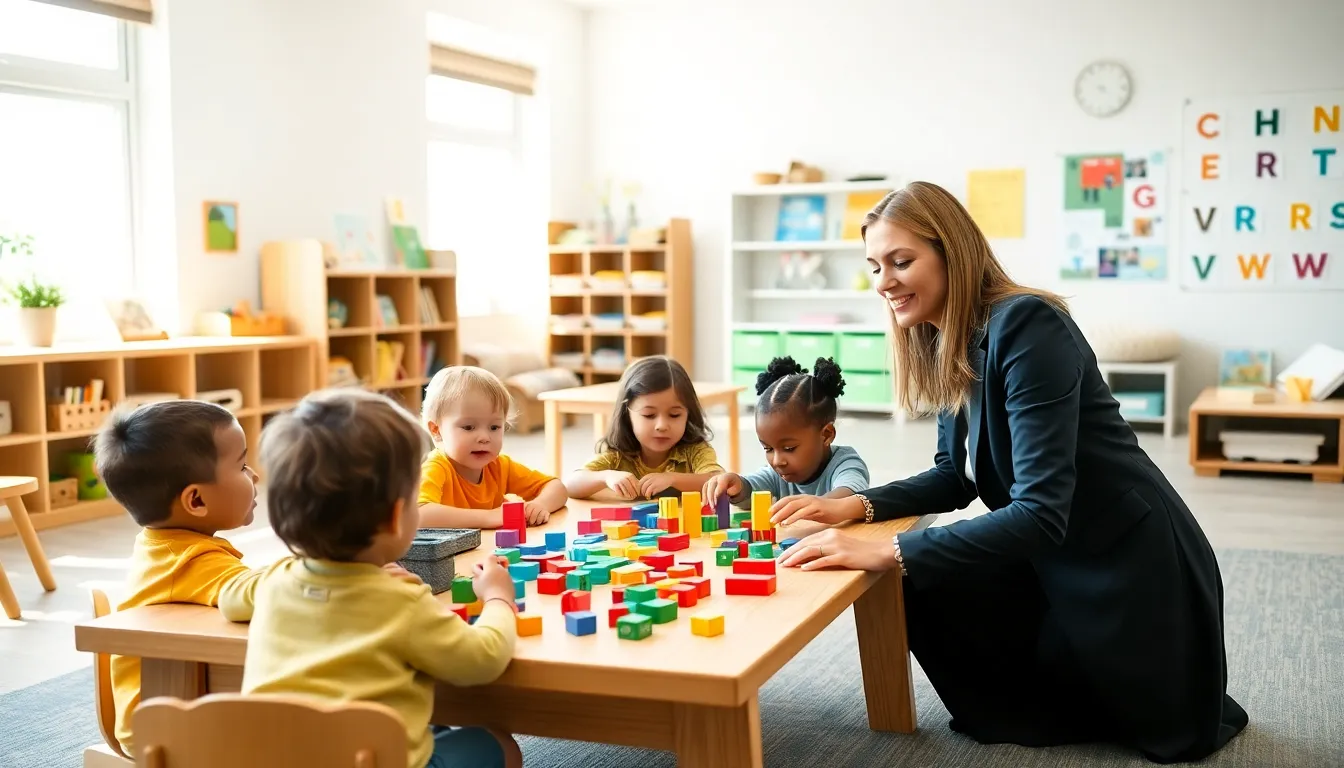
Early childhood education for beginners starts with one simple truth: the first five years shape everything. During this time, children build the foundation for language, social skills, and cognitive development. Parents and caregivers often wonder where to begin. They ask what programs exist, which approach works best, and how they can support learning at home. This guide answers those questions. It covers the basics of early childhood education, explains why these years matter so much, and offers practical steps anyone can take to give children a strong start.
Table of Contents
ToggleKey Takeaways
- Early childhood education for beginners focuses on the first five years, when 80% of brain development occurs and foundational skills are built.
- Quality early childhood education programs improve school readiness, vocabulary, math skills, and long-term outcomes like higher income.
- Key developmental areas include cognitive, language, social-emotional, physical, and creative skills—all essential for a child’s growth.
- Program options range from daycare centers and preschools to Montessori, Waldorf, and Head Start, each with unique approaches.
- Parents can support early learning at home by reading daily, engaging in play, creating routines, and encouraging curiosity.
- Early childhood education happens everywhere—every conversation, game, and moment of connection contributes to a child’s development.
What Is Early Childhood Education?
Early childhood education refers to the formal and informal learning experiences children receive from birth to age eight. This period covers the most rapid brain development in a person’s life. Programs during this stage focus on building foundational skills through play, structured activities, and social interaction.
Early childhood education includes preschools, daycare centers, Head Start programs, and kindergarten classrooms. It also includes the learning that happens at home when parents read books, sing songs, or teach basic concepts like colors and numbers.
The goal of early childhood education is straightforward: prepare children for academic success while supporting their emotional and social growth. Teachers and caregivers use age-appropriate methods to encourage curiosity and build confidence. They create environments where children feel safe to explore, ask questions, and make mistakes.
For beginners, understanding early childhood education means recognizing that learning starts long before formal schooling. Every conversation, every game, and every moment of connection contributes to a child’s development.
Why Early Learning Matters
Research consistently shows that early learning has lasting effects. Children who participate in quality early childhood education programs perform better in school, earn higher incomes as adults, and experience fewer behavioral problems.
The brain develops faster during the first five years than at any other time. By age three, a child’s brain has already reached 80% of its adult size. Neural connections form at an astonishing rate during this window. Positive experiences strengthen these connections. Negative experiences or lack of stimulation can weaken them.
Early childhood education provides the stimulation children need. It exposes them to language, numbers, problem-solving, and social situations. Children learn how to share, take turns, and express their emotions in healthy ways. These skills serve them throughout life.
Studies from the National Institute for Early Education Research show that children who attend preschool enter kindergarten with stronger vocabulary and math skills. They also show better self-regulation, which means they can focus, follow instructions, and manage frustration more effectively.
For families considering early childhood education, the evidence is clear. Investing in these early years pays dividends for decades.
Key Developmental Areas in Early Childhood
Early childhood education addresses several developmental areas. Each one plays a critical role in a child’s overall growth.
Cognitive Development
This area covers thinking, learning, and problem-solving. Children develop memory, attention span, and reasoning abilities. Activities like puzzles, sorting games, and simple science experiments build cognitive skills.
Language and Literacy
Children learn to communicate through speaking, listening, reading, and writing. Early childhood education programs emphasize vocabulary building, storytelling, and phonemic awareness. Reading aloud to children every day is one of the most effective ways to support language development.
Social-Emotional Development
Children learn to understand their own feelings and the feelings of others. They practice sharing, cooperation, and conflict resolution. Quality early childhood education programs create opportunities for peer interaction and teach emotional vocabulary.
Physical Development
Gross motor skills involve large movements like running, jumping, and climbing. Fine motor skills involve smaller movements like holding a pencil or buttoning a shirt. Both types of physical development receive attention in early childhood education settings.
Creative Development
Art, music, and dramatic play allow children to express themselves and explore ideas. Creative activities also build fine motor skills and encourage problem-solving.
Understanding these developmental areas helps parents and caregivers recognize what early childhood education programs should offer.
Types of Early Childhood Education Programs
Several types of early childhood education programs exist. Each has distinct features, schedules, and approaches.
Daycare Centers
Daycare centers provide full-day care for infants through preschool-age children. They offer structured activities alongside basic care like meals and naps. Quality varies widely, so parents should research licensing, staff qualifications, and curriculum.
Preschools
Preschools focus specifically on preparing children ages three to five for kindergarten. They typically operate part-day schedules and emphasize academic readiness, social skills, and creative play.
Head Start Programs
Head Start is a federally funded program serving low-income families. It provides free early childhood education along with health, nutrition, and family support services. Head Start programs follow national quality standards.
Montessori Schools
Montessori programs use a child-directed approach. Children choose their own activities from a prepared environment. Teachers guide rather than instruct. This method encourages independence and self-paced learning.
Reggio Emilia Approach
This approach originated in Italy and emphasizes project-based learning and artistic expression. Children explore topics that interest them through hands-on activities and collaboration.
Waldorf Schools
Waldorf education focuses on imagination, creativity, and hands-on learning. Academic instruction begins later than in traditional programs, with early years devoted to play and artistic activities.
For beginners exploring early childhood education options, visiting programs and asking questions helps identify the best fit.
How to Support Early Learning at Home
Parents and caregivers play a central role in early childhood education. Home provides countless opportunities for learning.
Read Every Day
Reading builds vocabulary, comprehension, and a love of books. Even ten minutes daily makes a difference. Ask questions about the story and let children hold the book and turn pages.
Talk and Listen
Conversation develops language skills. Describe what you’re doing, ask open-ended questions, and listen carefully to children’s responses. Expand on what they say to introduce new vocabulary.
Play Together
Play is how children learn. Building blocks teach spatial reasoning. Pretend play develops imagination and social skills. Simple board games introduce turn-taking and following rules.
Create Routines
Predictable routines help children feel secure and develop self-regulation. Consistent bedtimes, mealtimes, and activity schedules support emotional development.
Limit Screen Time
The American Academy of Pediatrics recommends limiting screen time for young children. Interactive activities with caregivers provide better learning experiences than passive screen viewing.
Encourage Curiosity
Answer questions patiently. Explore nature together. Visit libraries, museums, and parks. Children learn best when they feel curious and supported.
Early childhood education happens everywhere, not just in classrooms. Home learning reinforces and extends what children experience in formal programs.