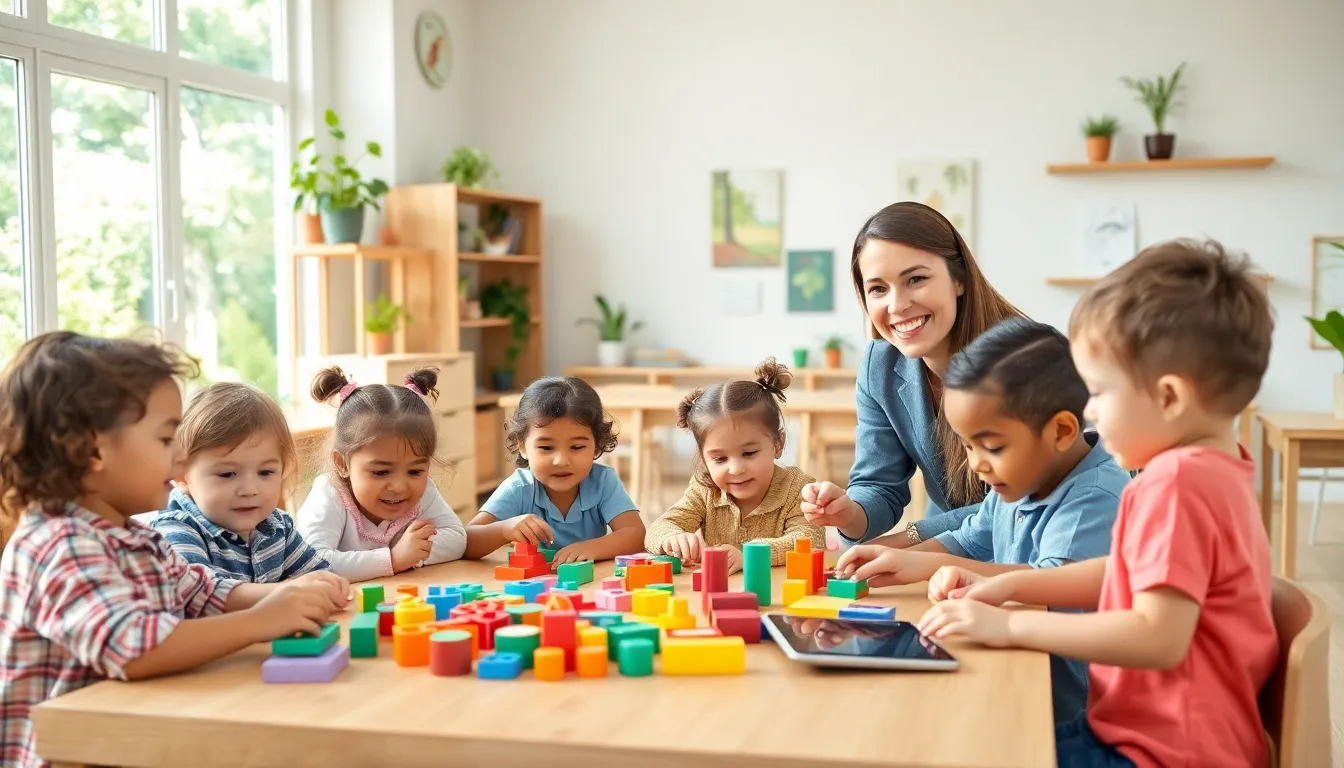
Early childhood education trends 2026 are reshaping how young children learn, play, and grow. Parents and educators face new opportunities as classrooms adopt fresh approaches to teaching. From AI-driven learning tools to outdoor classrooms, the landscape looks different than it did just a few years ago.
These shifts matter. Research shows that early learning experiences shape brain development, social skills, and academic success. The trends gaining momentum in 2026 reflect what science tells us about how children learn best. They also respond to what families want: education that sees each child as an individual.
This guide breaks down the most significant early childhood education trends 2026 has to offer. Whether you’re a parent choosing a preschool or an educator updating your curriculum, these insights will help you make informed decisions.
Table of Contents
ToggleKey Takeaways
- Early childhood education trends 2026 include AI-powered personalized learning that adapts to each child’s pace while keeping screen time under 20 minutes daily.
- Social-emotional learning (SEL) is now essential, helping children build emotional vocabulary and stress management skills that benefit them for years.
- Nature-based and outdoor education programs have grown 30% in three years, improving physical health, focus, and creativity in young learners.
- Play-based STEM integration teaches engineering, math, and coding concepts through hands-on activities like building blocks and water tables.
- Inclusive and culturally responsive classrooms ensure every child sees themselves reflected through diverse books, materials, and teaching practices.
- Parents can reinforce these early childhood education trends at home through simple activities like asking about feelings, outdoor exploration, and following their child’s curiosity.
AI-Powered Personalized Learning
Artificial intelligence has entered the preschool classroom. Early childhood education trends 2026 show a surge in AI tools that adapt to each child’s pace and style of learning.
These systems track how a child responds to activities. If a four-year-old struggles with letter recognition, the software adjusts. It might offer more practice with the letter “B” before moving to “C.” If another child masters shapes quickly, they get more challenging puzzles.
Teachers don’t step aside, they step up. AI handles repetitive assessments and gives educators real-time data. This frees teachers to do what humans do best: connect with children, guide social interactions, and spark curiosity.
Parents receive detailed progress reports. They see exactly where their child excels and where they need support. No more vague “doing well” updates.
Privacy remains a valid concern. Reputable programs use encrypted data and limit what information they collect. Parents should ask schools about their data policies before enrollment.
The goal isn’t to raise screen time. Most AI-powered programs recommend 15 to 20 minutes of digital interaction per day for preschoolers. The rest of the learning happens through hands-on play and human connection.
Social-Emotional Learning Takes Center Stage
Social-emotional learning (SEL) has moved from a nice-to-have to a must-have. Early childhood education trends 2026 place emotional intelligence on equal footing with academic readiness.
Children learn to name their feelings. They practice calming strategies like deep breathing. They develop empathy by discussing how classmates might feel in different situations.
Why does this matter? Studies link strong social-emotional skills to better academic outcomes, healthier relationships, and improved mental health in later years. Children who learn to manage frustration at age four handle stress better at age fourteen.
Classrooms now include “calm corners” with sensory tools. Teachers use picture books to discuss emotions. Circle time focuses on problem-solving and conflict resolution.
This shift also helps teachers. When children can express feelings with words instead of tantrums, classrooms run more smoothly. Everyone benefits.
Parents can reinforce SEL at home. Simple questions like “How did that make you feel?” or “What could we do differently next time?” build emotional vocabulary and reflection skills.
Nature-Based and Outdoor Education
Early childhood education trends 2026 include a strong push toward outdoor learning. Forest schools and nature-based programs have grown by 30% over the past three years.
Children learn differently outside. They observe insects, collect leaves, and build with sticks. These activities develop motor skills, scientific thinking, and creativity. Nature provides endless open-ended materials.
Outdoor time also supports physical health. Children who spend more time outside show lower rates of obesity and better sleep patterns. Fresh air and movement improve focus when children return indoors.
Weather isn’t a barrier, it’s a learning opportunity. Programs teach children to dress for rain, snow, and sun. They learn resilience and adaptability.
Urban programs get creative. Rooftop gardens, park partnerships, and nature walks through city neighborhoods bring outdoor learning to children without access to forests.
Some parents worry about safety. Quality programs maintain appropriate adult-to-child ratios and conduct regular risk assessments. Minor scrapes happen, but so does confidence-building.
Play-Based STEM Integration
STEM education starts earlier than ever, but it looks nothing like high school science class. Early childhood education trends 2026 emphasize play-based STEM that feels like fun, not work.
Building blocks teach engineering principles. Water tables demonstrate physics. Sorting activities introduce mathematical thinking. Children don’t memorize facts, they discover them.
Teachers ask open-ended questions. “What do you think will happen if we add more water?” beats “Pour the water here.” This approach builds critical thinking and curiosity.
Coding concepts appear without screens. Children arrange sequence cards to “program” a classmate to walk across the room. They learn cause and effect, patterns, and logical thinking.
Girls receive equal encouragement in STEM activities. Early exposure helps close gender gaps that appear in later grades. When all children see themselves as scientists and builders, more pursue those paths.
Parents can extend STEM learning at home. Kitchen measuring, backyard bug hunts, and simple building projects reinforce classroom concepts. The key is following a child’s curiosity rather than forcing structured lessons.
Inclusive and Culturally Responsive Practices
Early childhood education trends 2026 prioritize classrooms where every child sees themselves reflected. Inclusive practices go beyond accessibility accommodations.
Book collections feature diverse characters, family structures, and abilities. Dolls and play figures represent different skin tones and body types. Classroom decorations show children from various backgrounds.
Culturally responsive teaching means more than a multicultural day. Teachers learn about the communities they serve. They incorporate families’ languages, traditions, and values into daily activities.
Children with disabilities learn alongside their peers whenever possible. Universal Design for Learning (UDL) creates environments that work for everyone. Flexible seating, visual schedules, and multiple ways to participate help all learners.
Family engagement looks different too. Schools meet parents where they are. They offer translation services, flexible meeting times, and multiple communication channels.
This approach benefits all children. Those from majority backgrounds develop empathy and cultural competence. Those from underrepresented groups feel valued and seen. Everyone learns that differences make communities stronger.